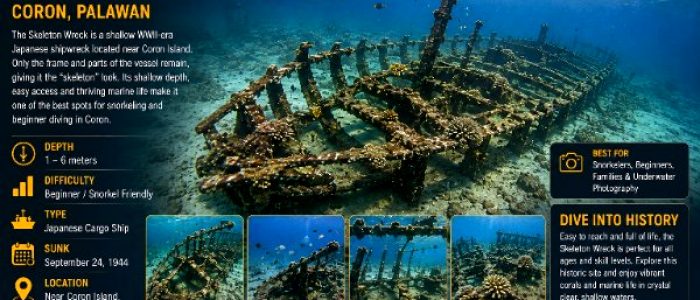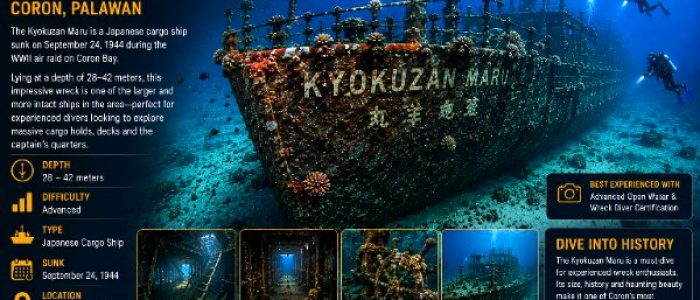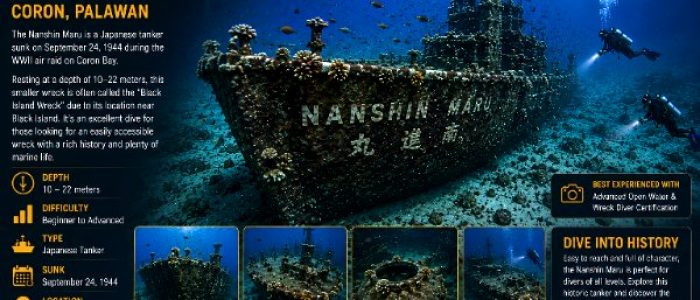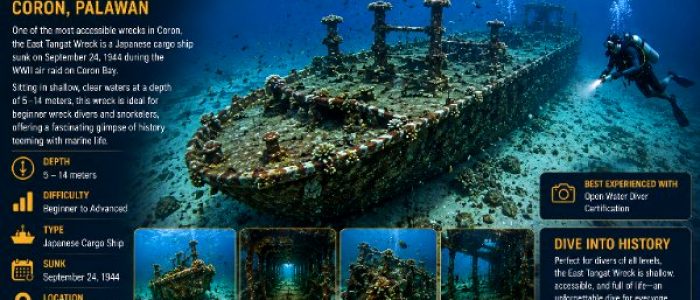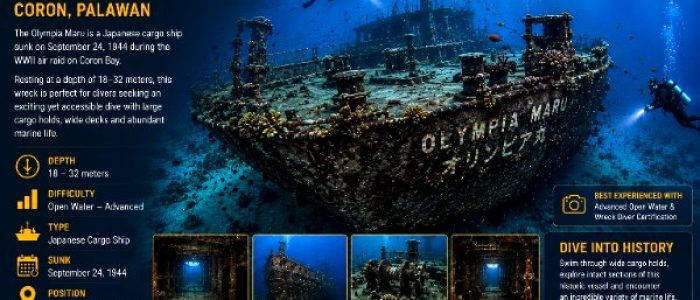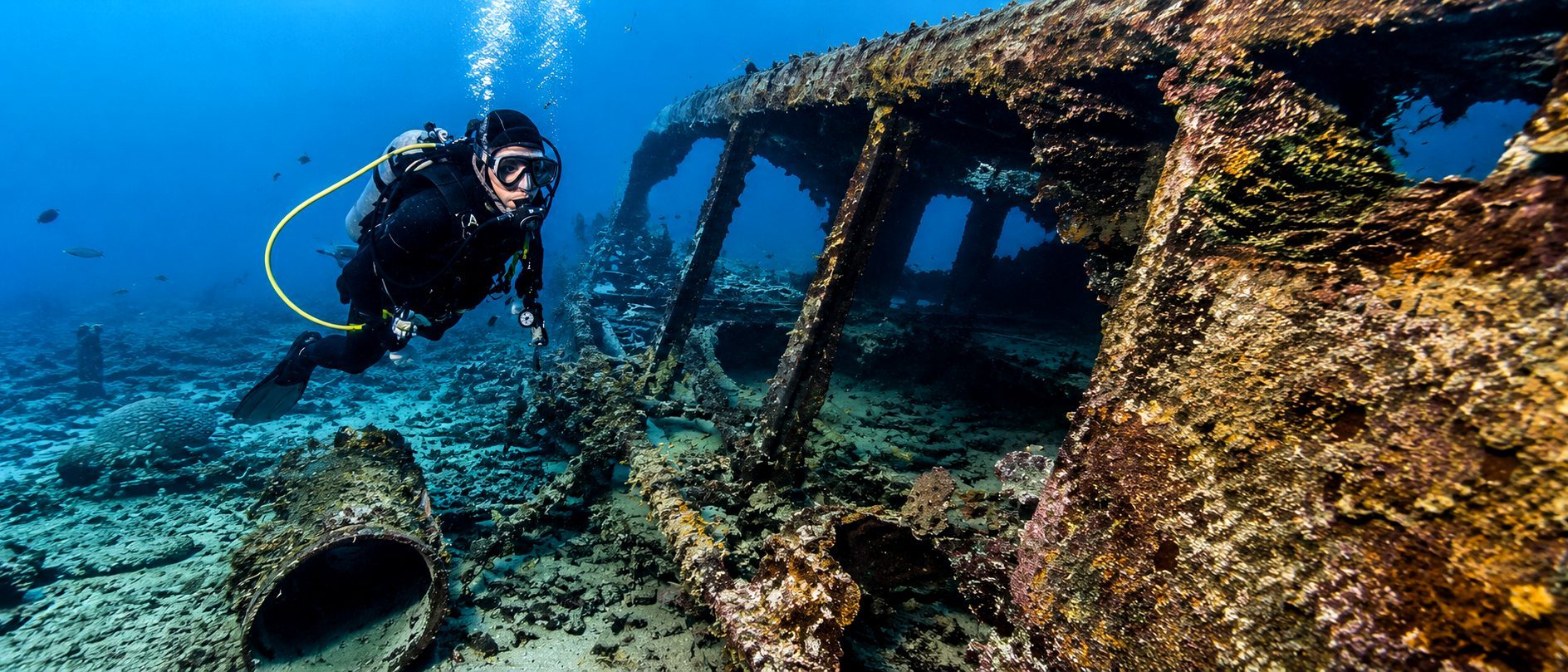
Coron's wrecks have transformed into thriving artificial reefs, attracting colorful corals, schools of tropical fish, and other marine life. Today, they offer some of the most unique diving experiences in the Philippines, combining history, underwater exploration, and marine biodiversity.
Several licensed dive operators in Coron offer guided trips suitable for different certification levels.
Spotlight: Irako Maru
One of Coron's most famous wrecks, Irako Maru was once a Japanese refrigeration and supply ship. Today, it is a favorite among experienced divers because of its large structure, impressive visibility, and abundant marine life.
Divers can explore spacious cargo holds, swim alongside resident fish, and admire coral growth that has flourished on the wreck over the decades. Due to its depth and overhead environments, Irako Maru is generally recommended for Advanced Open Water divers or those with appropriate wreck diving experience.
Responsible Wreck Diving
These wrecks are both historical sites and protected marine habitats. To help preserve them:
- Never remove artifacts or disturb the wreck.
- Maintain proper buoyancy to avoid damaging corals.
- Follow your dive guide's instructions.
- Avoid entering enclosed spaces without proper wreck-diving training.
- Respect marine life and avoid touching wildlife.
Responsible diving ensures these remarkable sites remain safe and protected for future generations.
Practical Visitor Information
Location: Coron Bay, Coron, Palawan
Access: Guided dive trips from licensed dive centers in Coron Town
Best Time to Dive: November to May
Recommended Certification:
- Open Water: Selected shallow wrecks
- Advanced Open Water: Irako Maru and deeper wreck dives
Bring:
- Dive certification card
- Logbook
- Underwater camera (optional)
- Reef-safe sunscreen for surface intervals