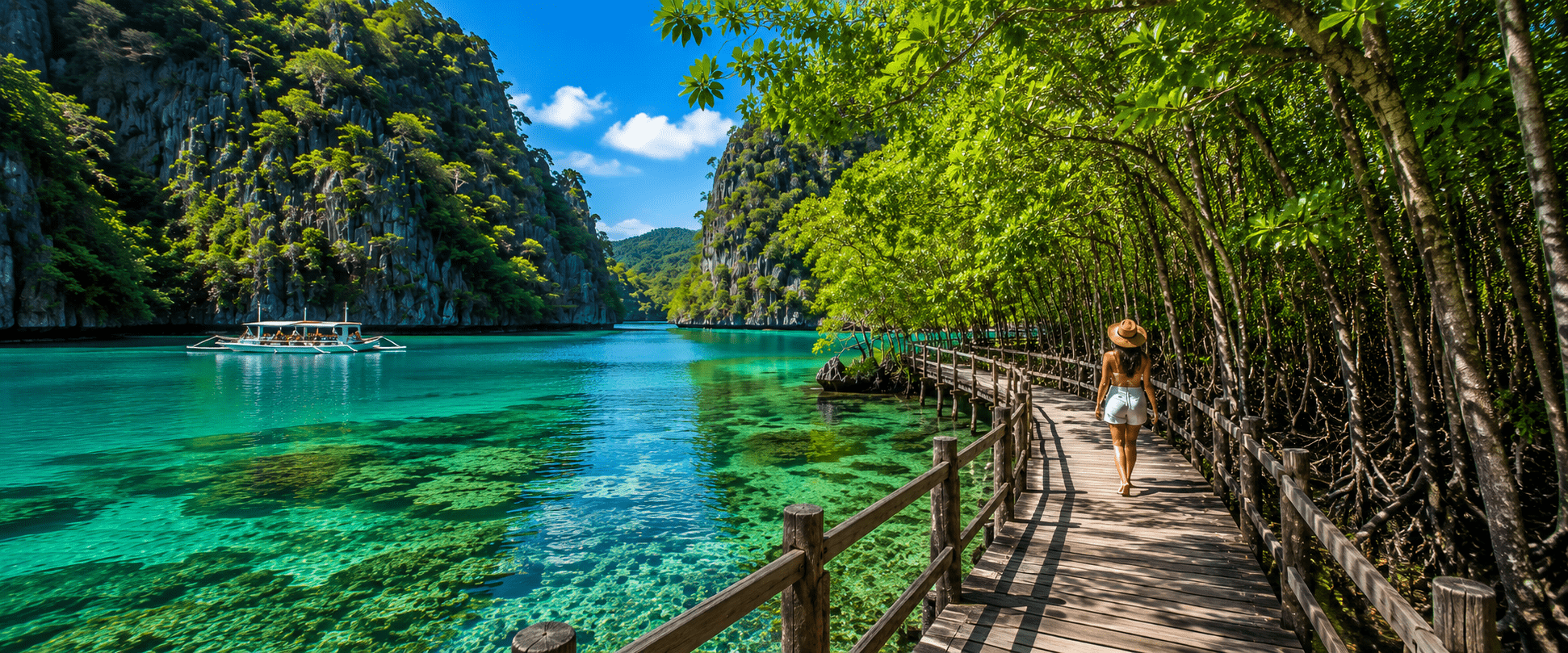
When most travelers think of Coron, images of Kayangan Lake, Twin Lagoon, and pristine island beaches immediately come to mind. Yet just beyond the popular tourist routes lies another remarkable environment that plays a vital role in protecting the region's coastal ecosystems—the mangrove forests of Coron Bay.
These tangled forests of roots and branches may not attract the same attention as Coron's famous limestone cliffs, but they are among the most important habitats in Northern Palawan. Serving as nurseries for fish, natural barriers against storms, and homes for countless species of birds and marine life, mangroves are essential to the health of the surrounding environment.
A Different Kind of Coron Adventure
Unlike the fast-paced schedules of island-hopping tours, mangrove eco-tours encourage visitors to slow down and observe the natural world.
Many excursions involve kayaking or paddleboarding through narrow channels surrounded by dense mangrove vegetation. The calm waters make these tours suitable even for beginners, while the peaceful atmosphere offers a welcome contrast to busier attractions. Visitors can glide through shaded waterways, listening to birds and watching small marine creatures move among the roots.
Wildlife Encounters
Mangrove ecosystems support an impressive variety of wildlife. Depending on the season and time of day, visitors may spot kingfishers, herons, crabs, mudskippers, and other species that depend on these coastal habitats. Early morning and late afternoon are often the best times for wildlife observation.
Local guides frequently share insights about how mangroves protect coastlines from erosion, improve water quality, and provide breeding grounds for many fish species that later populate nearby reefs.
Fireflies and Evening Eco-Tours
Some mangrove areas near Coron become especially magical after sunset. Certain eco-tours combine mangrove exploration with firefly viewing experiences, where visitors drift quietly through the darkness while tiny lights flicker among the trees.
On suitable evenings, bioluminescent plankton may also be visible in the water, creating a memorable nature experience that feels completely different from Coron's daytime attractions.
Learning Through Sustainable Tourism
Eco-tours provide more than recreation. They also help visitors understand why mangrove conservation matters.
Healthy mangrove forests support fisheries, protect coastal communities from storm surges, store significant amounts of carbon, and contribute to biodiversity throughout Palawan. By participating in responsible eco-tourism activities, travelers help support local conservation efforts and community-based tourism initiatives.
What to Bring
For a comfortable mangrove eco-tour, consider bringing:
- Lightweight clothing
- Hat and sunglasses
- Reef-safe sunscreen
- Drinking water
- Waterproof phone pouch
- Insect repellent
- Camera or binoculars for wildlife viewing
A dry bag is also useful for protecting personal belongings during kayak excursions.
Why Mangroves Matter
Mangrove forests may not always appear on the front covers of travel brochures, but they are among the most valuable ecosystems in the Philippines. Their intricate root systems shelter marine life, stabilize shorelines, and support biodiversity throughout the region. Similar mangrove conservation projects across the country have demonstrated their importance for both environmental protection and sustainable tourism.
Visitor Tip
If your Coron itinerary already includes island-hopping, consider adding a half-day mangrove eco-tour or sunset kayaking experience. It offers a quieter, more reflective perspective on Palawan's natural beauty and provides a deeper appreciation of the ecosystems that help make Coron one of the Philippines' most remarkable destinations.
