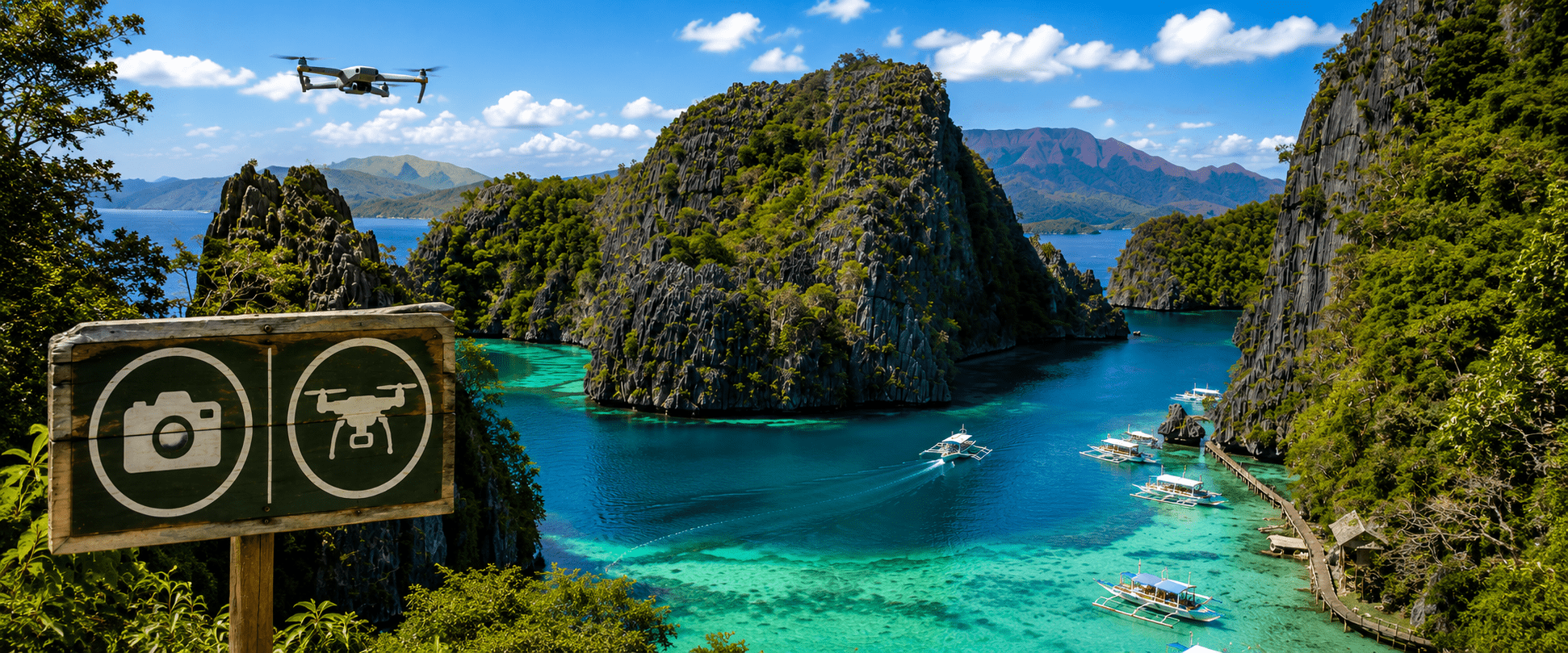
Coron is one of the most photographed destinations in the Philippines. Its iconic limestone islands, crystal-clear waters, hidden lagoons, and spectacular viewpoints attract photographers from around the world. Whether you're capturing memories with a smartphone, shooting professional content with a camera, or flying a drone for aerial footage, responsible photography helps preserve the destinations that make Coron so special.
Personal Photography Is Generally Welcome
For most visitors, taking photos and videos for personal use is straightforward. Popular tourist attractions, beaches, viewpoints, and island-hopping destinations are commonly photographed by travelers every day.
However, visitors should remain respectful of local communities and always ask permission before taking close-up photographs of individuals, especially children, local residents, or cultural activities.
Commercial Photography May Require Authorization
Professional photo shoots, advertising campaigns, promotional content, and commercial filming projects may require approval from property owners, local authorities, tour operators, or protected-area managers depending on the location and scale of the production.
If your project involves models, extensive equipment, exclusive site access, or commercial publication, it is advisable to coordinate with local authorities and relevant site managers in advance.
Understanding Drone Regulations
Drone use in the Philippines is regulated by the Civil Aviation Authority of the Philippines (CAAP). Drone operators are responsible for understanding and complying with national aviation regulations before flying.
General recreational drone guidelines commonly include:
- Flying only during daylight hours
- Maintaining visual line of sight with the drone
- Avoiding flights over large crowds
- Staying away from airports and aviation corridors
- Respecting altitude limitations
- Operating safely and responsibly at all times
Protected Areas May Have Additional Restrictions
Many of Coron's most famous attractions are located within environmentally sensitive or protected areas. Certain locations may impose additional restrictions on drone operations to protect wildlife, preserve visitor experiences, or safeguard cultural sites. Protected areas in the Philippines may require special permissions for drone activities.
Visitors should never assume that drone flights are automatically permitted simply because an area is outdoors.
Wildlife and Environmental Considerations
One important reason for drone restrictions is the protection of wildlife. Local guides and community members occasionally advise against flying drones in areas where birds or sensitive wildlife may be disturbed. Responsible drone operators should avoid nesting areas, wildlife habitats, and situations where aircraft noise may cause stress to animals.
If wildlife appears disturbed, the safest approach is to immediately increase distance or discontinue the flight.
Respect Private Property and Resorts
Many beaches, resorts, and privately managed tourism facilities have their own photography and drone policies. Always seek permission when operating from private property or flying over facilities managed by private operators.
Obtaining permission beforehand helps avoid misunderstandings and ensures a better experience for both visitors and property owners.
Safety Comes First
No photograph or video is worth compromising safety. Weather conditions can change rapidly in Palawan, especially during the rainy season. Strong winds, sudden rain showers, and boat traffic can create additional risks for drone operations.
Before every flight, operators should evaluate weather conditions, nearby people, wildlife, boats, and surrounding terrain.
Visitor Tip
If you plan to fly a drone at any Coron attraction, ask your tour guide, boat operator, resort staff, or site management first. Rules can vary by location, and local guidance is often the best way to ensure you're flying responsibly while helping protect Coron's natural and cultural treasures for future generations.